Network
The connection drops
The board stays on screen with what it already has, and says it is offline. Bumps are recorded locally and sync when the connection returns.
Kitchen
A tablet on the pass, or the counter tablet switched into kitchen mode. Tickets arrive when they are fired, laid out to be read at arm’s length.
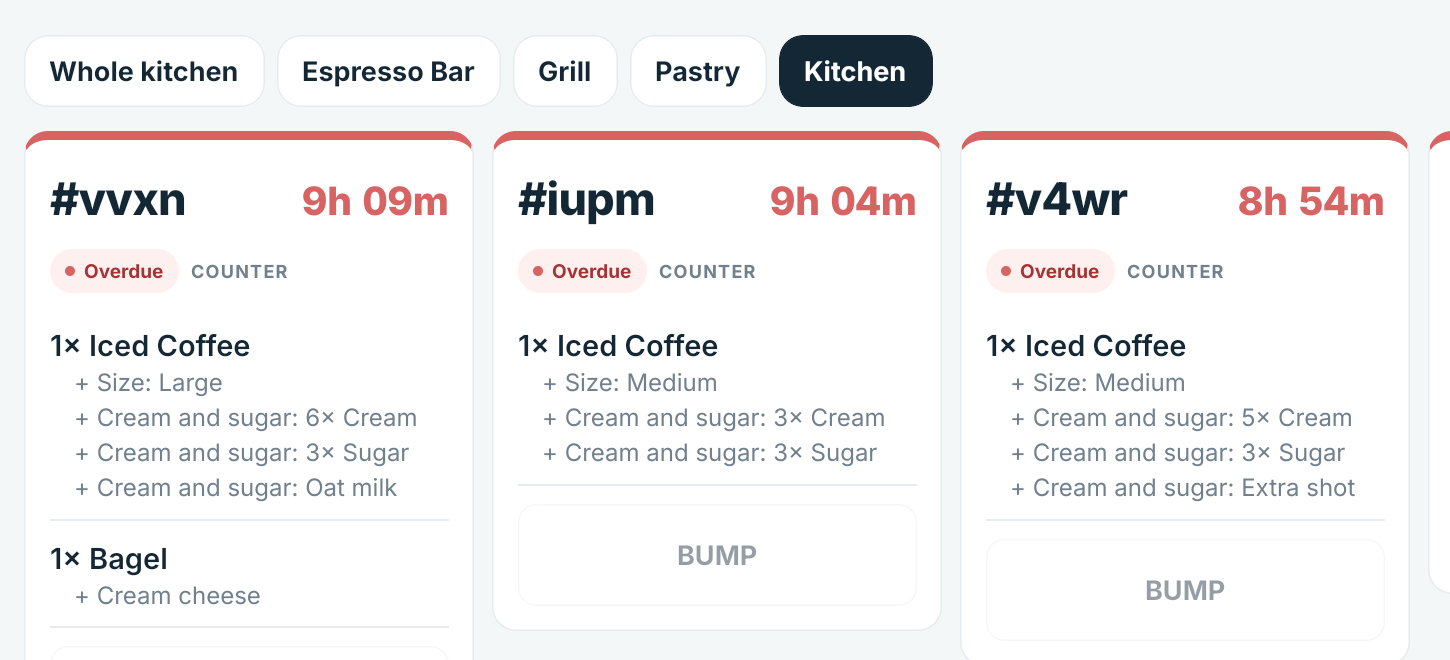
The board
Age is what a kitchen actually runs on, so it is large and it counts up.
Routing
The espresso bar sees drinks, the grill sees grill, and a ticket that needs both says so.
Structurally once per order, which is what makes everything after it countable.
Against the menu in force at that moment. Change a station at noon and the ticket already cooking does not rearrange itself.
Each station gets its own screen, or one screen shows the whole kitchen. Both read the same tickets.
A cook can see which other station is holding a ticket up, rather than plating early and letting it sit.
When things go wrong
Network
The board stays on screen with what it already has, and says it is offline. Bumps are recorded locally and sync when the connection returns.
Process
It comes back to the same board. Tickets are not held in memory — they are folded from the log, so a restart mid-service loses nothing.
Duplication
It is recorded once. A reconnect that replays what happened cannot turn one bump into two, so a ticket does not vanish from the board and then reappear.
Ordering
They cannot. Tickets are ordered by a single authoritative sequence rather than by device clocks, which are wrong.